Common Mistakes Buyers Make in Custom Cardboard Display Projects
Custom cardboard display projects work better when buyers plan structure, testing, cost, shipping, and compliance details before production begins.
Back to blogs
Custom cardboard display projects rarely fail due to a major mistake. More often, they run into trouble because multiple minor issues accumulate over time. Project requirements may be incomplete; the cardboard structure may not be able to support the weight of the products; or the timeline may be too tight. Key details such as barcodes, promotional slogans, and retailer requirements can also cause problems if confirmed too late.
A custom display stand is far more than a visual design concept; it must also be practical in production, shipping, in-store assembly, and daily restocking. When buyers focus too much on appearance, low cost, or speed, the final product may look impressive in renderings but perform poorly in practical use.
1. Starting with an Incomplete Project Brief
Many project problems take root long before the design begins. If the buyer fails to clearly define product weight, packing count, store layout, shipping routes, restocking methods, assembly requirements, and retailer expectations, the supplier has no choice but to make assumptions too early in the process. This often leads to avoidable rework.
A display unit may look perfect on the screen, but issues can still arise during shipping, assembly, or in-store use. The clearer the requirements are defined at the early project stage, the lower the risk of costly problems later in the project.
2. Choosing Board Structure Without Enough Technical Planning
Board selection has a direct impact on display performance. Different flute types and board combinations serve different purposes. Some are better for compression strength. Some support better printing quality. Others are more suitable for taller or heavier display units.
If the board is too light, the display may tilt, collapse, or deform; if it is too heavy, the project may incur unnecessary material and shipping costs. Our goal is not simply to choose the sturdiest board, but to select the most suitable structure based on the product, graphic design, and retail channels.
3. Treating prototyping and testing as optional steps
Another common mistake is trying to save time by skipping the sampling stage. In reality, this often merely defers risks to later stages rather than eliminating them.
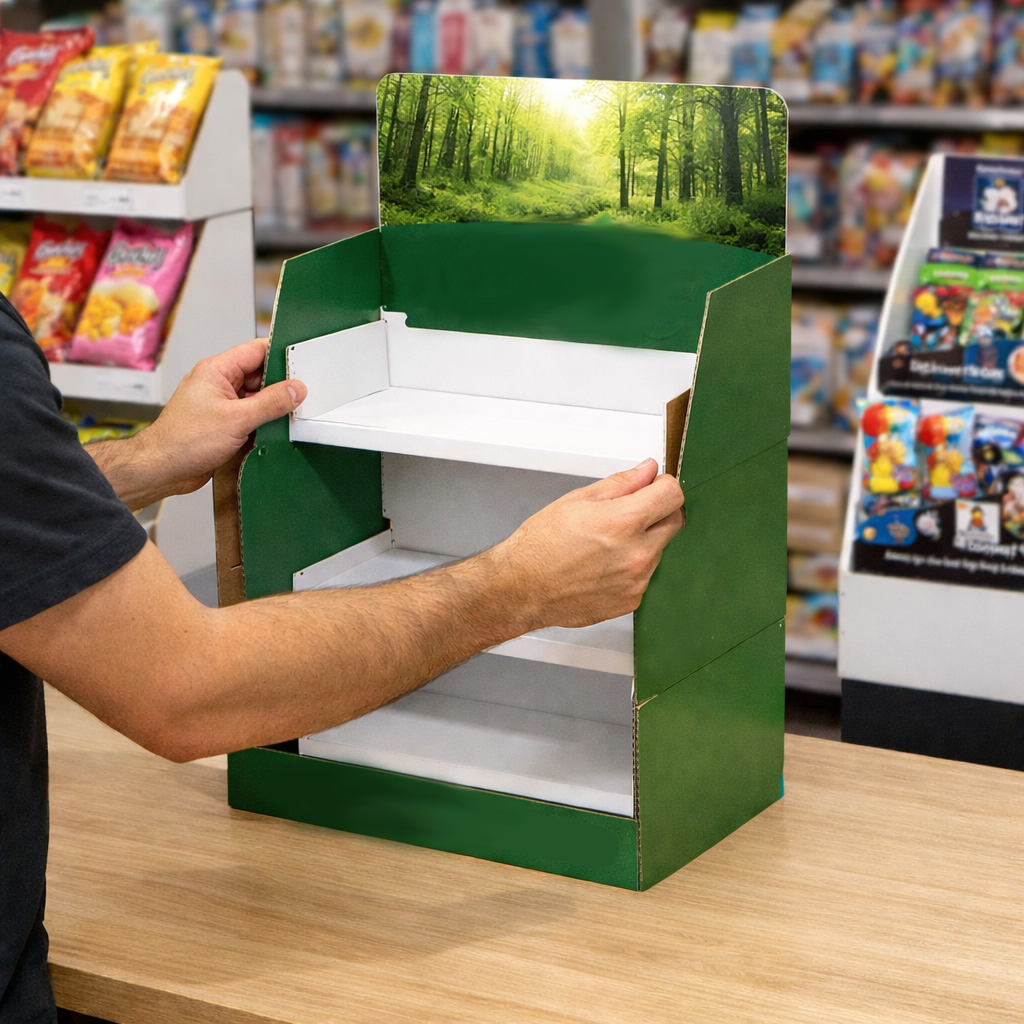
Physical prototypes help confirm the product’s fit, structure, appearance, and ease of assembly. Load testing or shipping tests help verify whether the display can endure actual shipping and in-store conditions. If these steps are skipped, smaller issues often emerge too late, when revisions are more expensive and harder to manage.
4. Focusing only on unit price rather than the total project cost
A low unit price does not always mean a low total project cost. In custom display work, the real cost also includes sampling, tooling, testing, packing, pallet planning, freight efficiency, and the risk of delays or damage.
If buyers compare quotes without considering these factors, they may choose an option that looks cheaper at first but costs more in actual execution. A better buying decision will consider the overall project performance, not just the initial price on the quote.
5. Making Compliance Changes Too Late
Late changes to barcodes, regulatory text, certification marks, or specific retailer requirements can delay production and result in unnecessary waste.
These details should be finalized before the print approval, not after. The same applies to sustainability claims. Corrugated display stands are generally recyclable, but certain coatings, finishing treatments, or mixed materials may affect their recyclability based on the target market. It is advisable to confirm these points as early as possible while specifications are still flexible.
How Buyers Can Reduce These Risks
The simplest way to avoid these problems is to follow a clear step-by-step process.
Start by defining the launch path to market, including shipping conditions, store environment, assembly method, restocking requirements, and retailer rules. Turn the information into a written brief. Then compare board options based on structural and graphic requirements, approve a physical prototype, complete any necessary testing, and define artwork and compliance details before the mass production begins.
This process may seem slower at the start, but it usually saves time, cost, and avoids rework later.
A Practical Buyer Checklist
Before moving forward with a custom cardboard display project, buyers should be able to answer these basic questions:
· Do we know the product load, packing count, and store environments?
· Have we defined how the display will be shipped, assembled, and replenished?
· Does the selected board structure match both strength requirements and printing expectations?
· Have we approved a physical prototype?
· Have we accounted for sampling, tooling, testing, and freight in the budget?
· Have the barcode content, claims, and certification marks been finalized before print approval?
If the answer to several of these questions is still no, the project is probably moving too fast.
Conclusion
Most problems with custom cardboard display problems can be prevented much earlier than buyers expect. In many cases, the real issue is not poor manufacturing but insufficient initial planning.
An excellent display stand should not only be visually appealing but also retain its shape, ship safely through the supply chain, adapt to the store environment, support restocking, and meet compliance requirements without any last-minute surprises.
For buyers, the optimal strategy is simple: never make decisions based on appearance or price alone. Instead, choose a display solution that functions smoothly from production through retail execution. Working with experienced display suppliers helps reduce risk early and ensures the project runs smoothly from start to end.


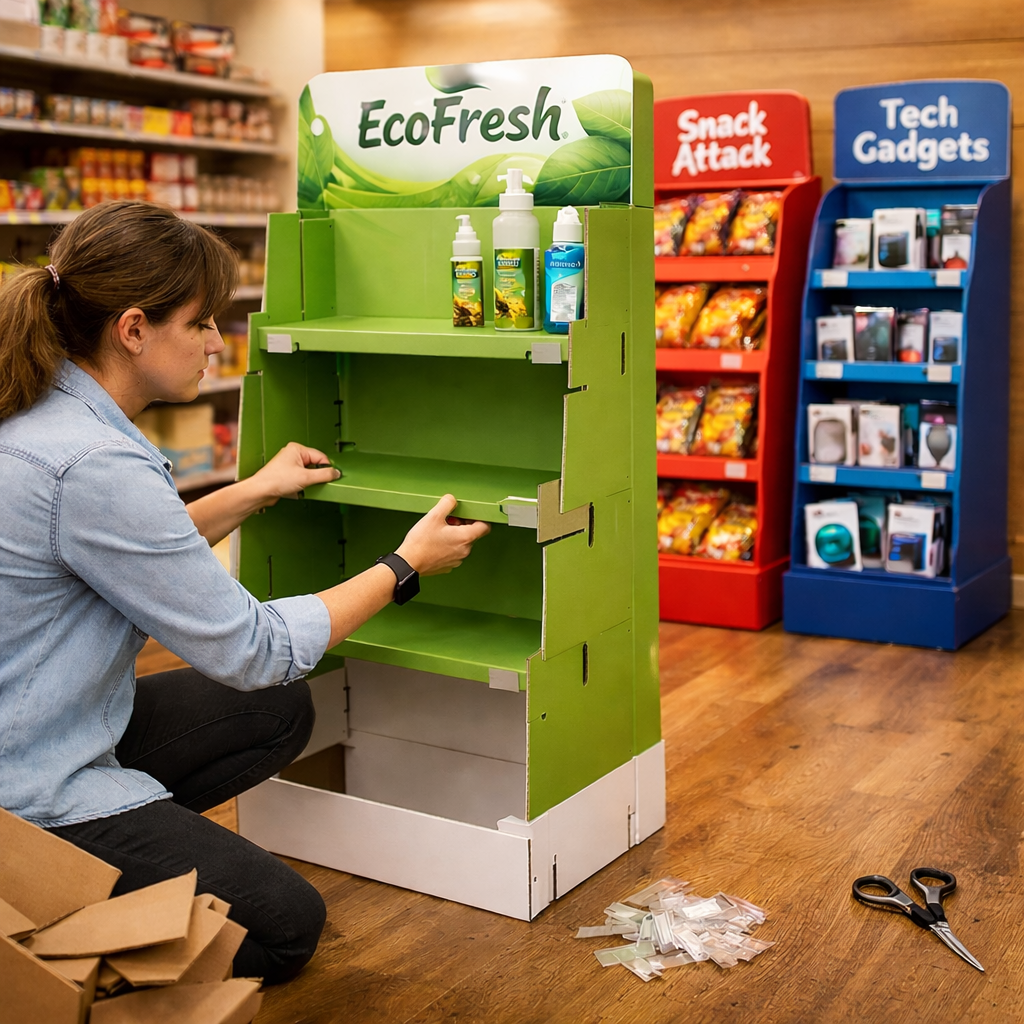
Corrugated cardboard display prototype shown in a professional design and planning workspace, highlighting material review, structural planning, and project preparation before production.
Useful Links:
Latest Posts
All Posts