Corrugated Displays for Costco: Compliance Checklist and Common Rejection Fixes
Corrugated displays for Costco must ship well, scan correctly, and arrive retail-ready. This checklist covers compliance risks and common rejection fixes.
Back to blogs
Executive Summary
The corrugated cardboard display stand designed for Costco not only needs to look attractive in-store but also be durable enough to endure the rigorous handling during shipping, scan correctly upon arrival, and be ready for immediate placement on the sales floor.
This is where many projects run into trouble. A display may appear solid in the sample room, but its performance often degrades after palletizing, packaging, shipping, warehousing, and delivery. Shelves sag, corners warp, bases lose rigidity, and labels become difficult to scan. The shipment no longer meets the recipient’s expectations.
The safest approach is to treat the display as both a display unit and a shipping unit from the start.
Start With Pallet Plan
Many avoidable problems often stem from rushing into graphic design or structure assembly before the pallet plan is fully finalized.
For displays intended for Costco, the pallet plan should be prioritized. Before finalizing the die-cut lines, it is essential to confirm the footprint, orientation, store-facing side, overall loading height, packing logic, and packaging method. These decisions will affect the display's stability, portability, scanning access, and in-store placement.
If the display is transported on a pallet and shipped directly to the sales area, the pallet plan should take priority over structure design.
Designed for Practical Use
Board grades should not be selected by appearance alone. A display stand may appear sturdy during inspection, but once loaded with actual products and subjected to distribution conditions, its performance may still fall short of expectations.
The key lies in system performance. The corrugated board structure, fluting direction, reinforcements, shelf span, adhesive strength, base design, and load-bearing paths must all be evaluated considering the actual product weight and operational conditions.
In Costco projects, failures often occur gradually. The display may still stand, but the front edges of the shelves begin to sag, the top panel tilts, the corners warp, or the base twists. At this stage, the display is no longer suitable for in-store use.
Control Labels Early
Labels are often treated as the final step in packaging. In reality, they are part of the shipping control.
Logistics labels need to be clearly scannable, applied to the correct position, and match the underlying shipping data. If the barcode quality is poor, the wrong version is applied, or the data does not match the packing list or digital records, the shipment may be delayed even if the goods are in perfect condition.
The readability of barcodes, the position of labels, and the accuracy of data should be verified before shipment release, rather than at the last minute.
Operate Based on One Approved Master Record
Not all shipping issues arise from structure. In many cases, displays are correctly set up, but the supporting information is mismatched.
The number of pallets on the label may not match the packing list. A purchase order may have been revised, but a team may still use the outdated version. The pallet allocation information shown on the physical label may differ from the shipment records.
The simplest way to reduce these risks is to manage shipment information based on an approved master record.
Validate Display Based on Actual Shipping Status
Sample room approvals are useful, but they are not enough.
Display units destined for Costco should be inspected in the same configuration as actual production. This means inspecting fully palletized and shrink-wrapped goods, not just assembled units. Check that the base stays square, the shelf locks remain secured, and the shrink-wrapped goods remain stable after handling.
Many costly issues often first emerge at this stage.
Treat Approval as a Clearance Checkpoint
For import programs, packaging compliance should be checked early, especially when wooden pallets or other regulated materials are involved. Delaying this review until the last minute may cause unnecessary delays.
Buyer approval should also be treated as a formal clearance checkpoint. This concerns not only the structural feasibility but also the final graphics, markings, and packaging details, which are required to match the approved version.
Printing production should not begin until these details are confirmed.
Costco-Specific Corrugated Cardboard Display Checklist
Before mass production, please confirm the following:
1. Pallet Layout
The footprint, orientation, product facing, load height, packing logic, and wrapping method all align with the approved plan.
2. Structure Suitability
The corrugated board grade, corrugation direction, reinforcements, shelf design, and base strength all meet the requirements for the actual product weight and handling conditions.
3. Shipping Validation
The display unit has been reviewed in its actual palletized and wrapped shipping condition.
4. Labeling and Data Control
Barcodes are clearly scannable, labels are positioned correctly, and shipping data is consistent across all records.
5. Approval Status
All approvals for graphics, markings, packaging details, and compliance checks must be completed before printing begins.
Common Reasons for Rejection
The display is not yet in a presentable condition.
Excessive unpacking, sorting, or assembly is required before shelving.
The structure weakens after handling.
While the product survived initial transport, it then begins to sag, lean, or warp.
Labels cannot be scanned clearly.
Barcodes are misplaced, print quality is poor, or shipment data does not match.
Failure to follow the buyer’s specific requirements.
General best practice was used instead of the approved version.
Conclusion
A corrugated display stand for Costco needs to work as a retail display, a shipping unit, and a compliant product.
Projects that run more smoothly usually excel in these aspects. They finalize pallet plans early, design based on handling requirements, validate shipping specifications, carefully control labeling and data, and pause production until formal approval is clear.
In Costco projects, execution is often the key factor deciding whether a project is approved or delayed.

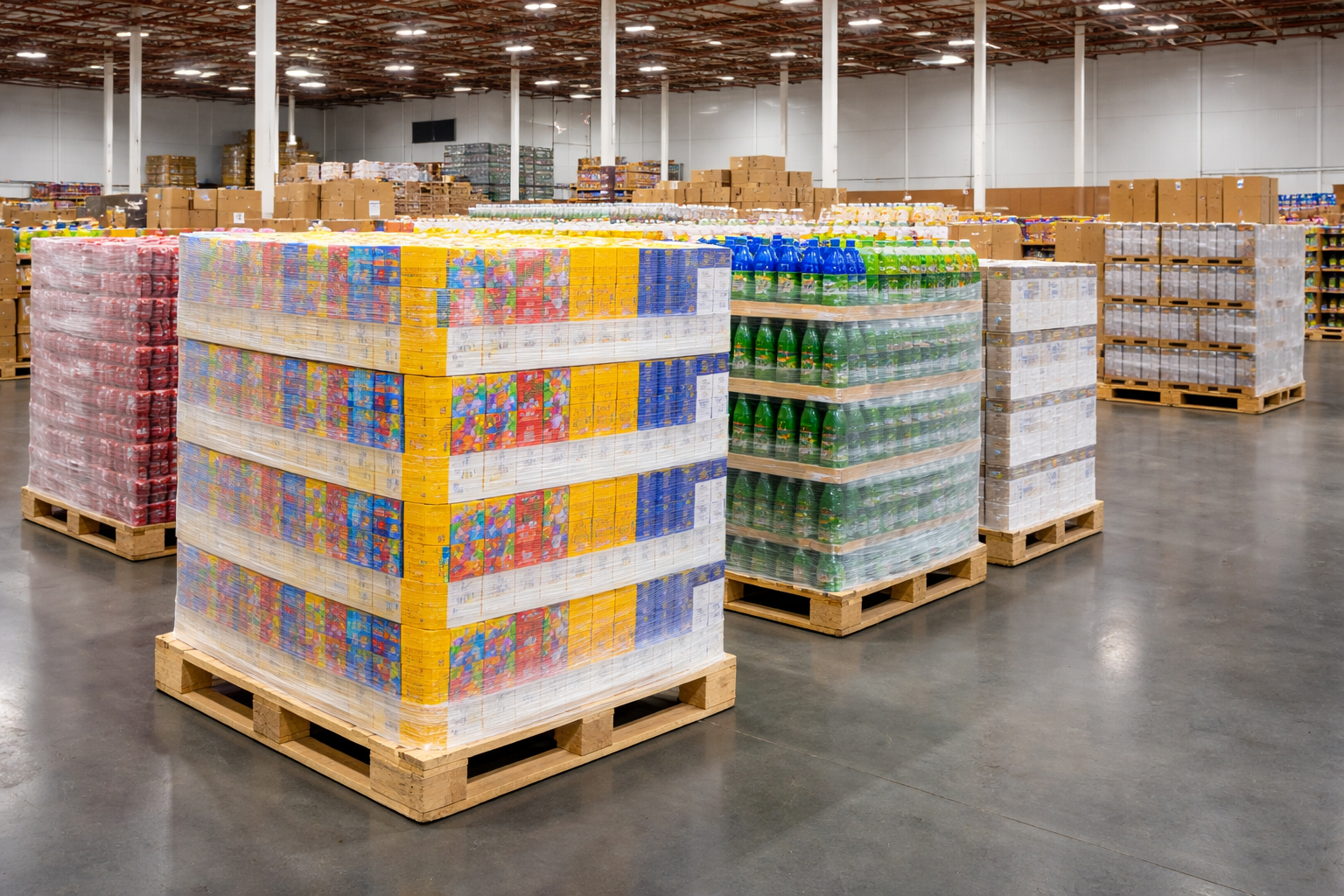
A Costco-ready corrugated display needs to do more than look good in store. It must ship securely, scan correctly, and arrive ready for fast retail placement.