The Origins and Modern Traditions of Halloween Displays
Explore the cultural evolution of Halloween displays from ancient roots to modern sustainable retail design.
Back to blogs
Halloween, celebrated on the night of October 31 each year, has now become one of the most visually expressive holidays of the year. Its evolution spans thousands of years: originating from ancient Celtic beliefs, it has gradually developed into today’s creative pumpkin carvings, elaborate yard displays, and themed window decorations. Halloween’s visual traditions are not only a celebration of autumn but also carry people’s lasting fascination with mystery, imagination, and a hint of eeriness.
Ancient Roots in the Festival of Samhain
The origins of Halloween can be traced back to the Celtic festival of Samhain. More than two thousand years ago, Celts in regions such as Ireland, Scotland, and Wales celebrated this festival. Samhain marked the end of the harvest season and the beginning of winter. The Celts believed that during this time, the boundary between the world of the living and the realm of the dead would blur. They thought the spirits of the deceased would return to Earth, so they lit sacred bonfires and wore animal-inspired costumes to protect themselves or confuse the spirits.
To appease these wandering souls, people placed offerings outside their homes. The Celts also carved faces into root vegetables like turnips, inserted embers inside to make lanterns, and used them to ward off evil spirits. These early lanterns are regarded as the predecessors of the modern jack-o'-lantern.
Religious Influence and the Rise of All Hallows’ Eve
As Christianity spread through Celtic lands, the Church sought to replace traditional festivals with Christian observances. In the 8th century, Pope Gregory III designated November 1 as All Saints’ Day, a day to honor saints and martyrs. The evening before became known as All Hallows’ Eve, which later evolved into today’s Halloween.
Many traditions from Samhain were preserved: the use of candles, wearing costumes, and holding symbolic processions. People dressed as saints, angels, or spirits in collective celebrations. A custom called souling also grew popular: children and the poor went door to door to pray for the dead in exchange for food or coins. This practice gradually developed into what we now know as trick or treating.
From Lanterns to Jack-o'-lanterns
The well-known jack-o'-lantern has its roots in Irish folklore. According to legend, a man named Stingy Jack tricked the devil and was condemned to wander the earth, with only a hollowed-out turnip lantern to light his way. In the 19th century, when Irish immigrants arrived in North America, they discovered that pumpkins were larger and easier to carve than turnips. Over time, pumpkins replaced turnips as the preferred material for making Halloween lanterns.
Today, glowing pumpkins carved with expressive faces have become a symbol of Halloween. Whether placed on porches, displayed on windowsills, or arranged into art installations, they convey creativity and enthusiasm, and reflect the holiday’s unique welcoming atmosphere.
The Rise of Costumes and Spooky Themes
Costumes are another defining feature of Halloween. In ancient times, Celts disguised themselves to avoid being recognized by spirits: during the Middle Ages, this practice evolved into guising and souling. By the early 20th century, children in the United States began dressing as witches, ghosts, and goblins for parades and trick-or-treating activities.
Over time, the range of Halloween themes has expanded significantly. Traditional images such as skeletons, witches, and bats remain popular, but modern costumes and decorations often incorporate characters from movies, television, and comic books. This diverse blend reflects both personal creativity and people’s ongoing fascination with supernatural themes.
Home Decorations and Neighborhood Traditions
One of the most enjoyable parts of Halloween is transforming homes and community spaces into festive and lively areas. When October arrives, porches and yards gradually fill with carved pumpkins, cobweb decorations, faux tombstones, and playful skeletons. Some households keep their decorations simple and understated, while others create elaborate setups with motion sensors, colored lights, and sound effects.
Decorating for Halloween has become a shared community activity. Neighbors often coordinate decoration themes and styles, or even launch friendly “best decoration” competitions. Entire streets are sometimes turned into immersive themed experience zones, attracting families and visitors to wander through, take photos, and admire the creativity on display. These collective efforts foster a strong sense of community belonging and seasonal joy.
Halloween in Retail Spaces
Retailers view Halloween as an important visual and commercial opportunity. Stores and shopping malls often revamp their displays at this time: transforming spaces with hanging bats, pumpkin displays, and skeletons posed with products. Such setups not only attract shoppers but also provide rich content for marketing and social media.
Some brands go even further by creating immersive Halloween experiences. Seasonal pop-up stores specialize in selling costumes and themed accessories, while larger retailers may set up interactive photo zones or spooky scenes for customers to explore. These arrangements encourage visitors to linger and engage, blending entertainment with retail interaction.
Evolving Trends in Sustainability and Design
As environmental awareness grows, sustainability has become a key focus in Halloween decorations. More and more households and retailers are choosing reusable, recyclable, and energy-efficient materials. Paper-based props, handmade items, and natural decorations such as pumpkins, gourds, hay bales, and autumn leaves are gradually replacing single-use plastic products.
Technology has also brought new creative methods: LED lights provide bright effects while saving energy, and projection mapping can turn walls or building facades into dynamic Halloween scenes. Some communities even hold competitions to recognize eco-friendly creative decorations, encouraging people to exercise their imagination while advocating for environmental responsibility.
This trend reflects a broader shift in values: people want to express holiday joy and creativity while also being mindful of their impact on the planet.
A Night of Visual Expression and Community Spirit
Halloween decorations blend history, art, and community spirit. From ancient bonfires and carved turnip lanterns to today’s glowing pumpkins and sustainable designs, every decoration tells a story that connects the past with the present.
Whether carving a pumpkin, making a costume, or placing a playful ghost decoration in your yard, you are continuing a centuries-old tradition that combines fear and joy, personal expression and collective celebration. Once a ritual to ward off the unknown and fears, Halloween has now become a festival of imagination, transformation, and togetherness. As October draws to a close, streets and stores are lit up again: glowing pumpkin faces, whimsical figures, playful dolls, and childlike decorations make this ever-evolving holiday captivate and touch people time and time again.
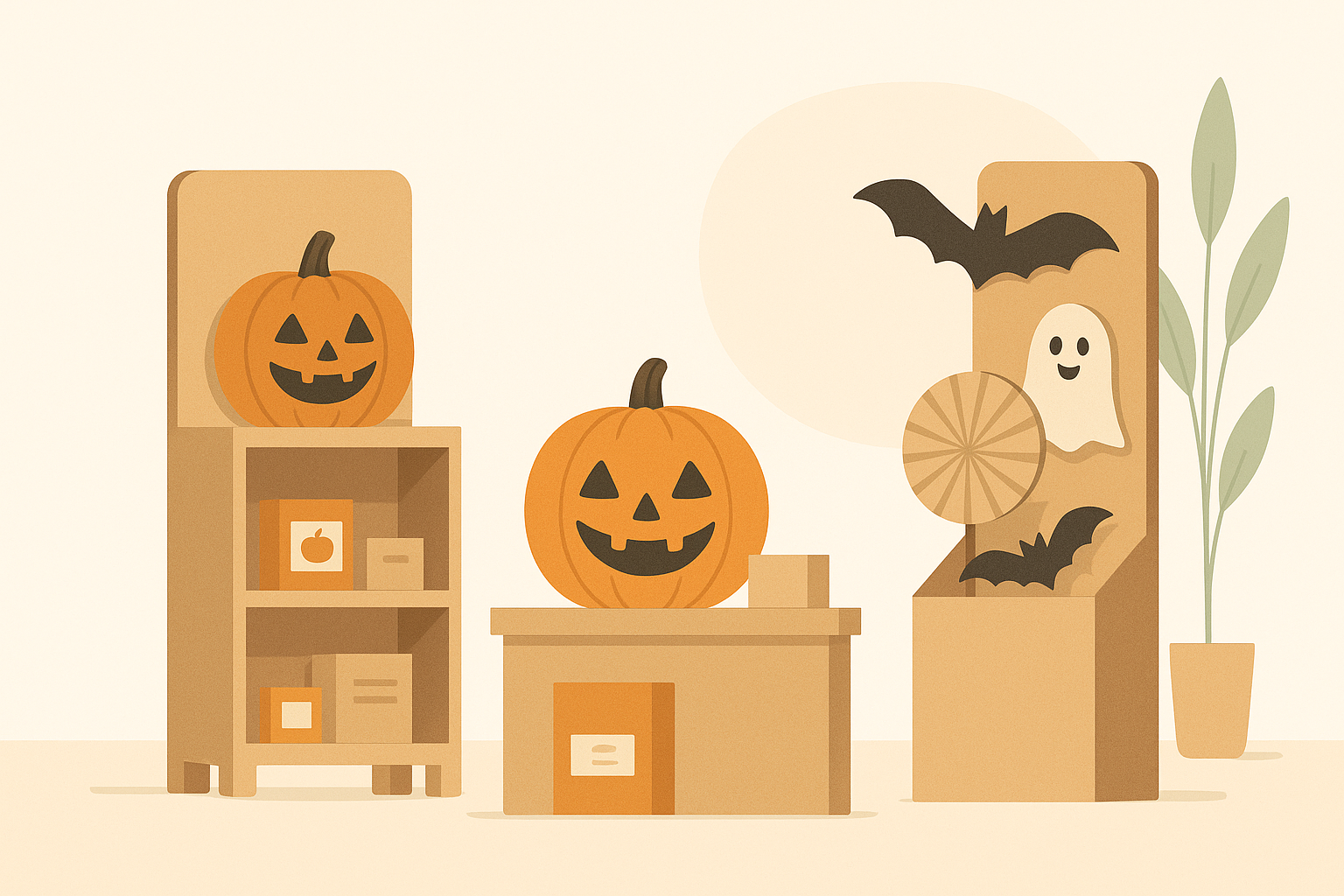
A cozy Halloween setup reflecting cultural warmth and festive tradition.
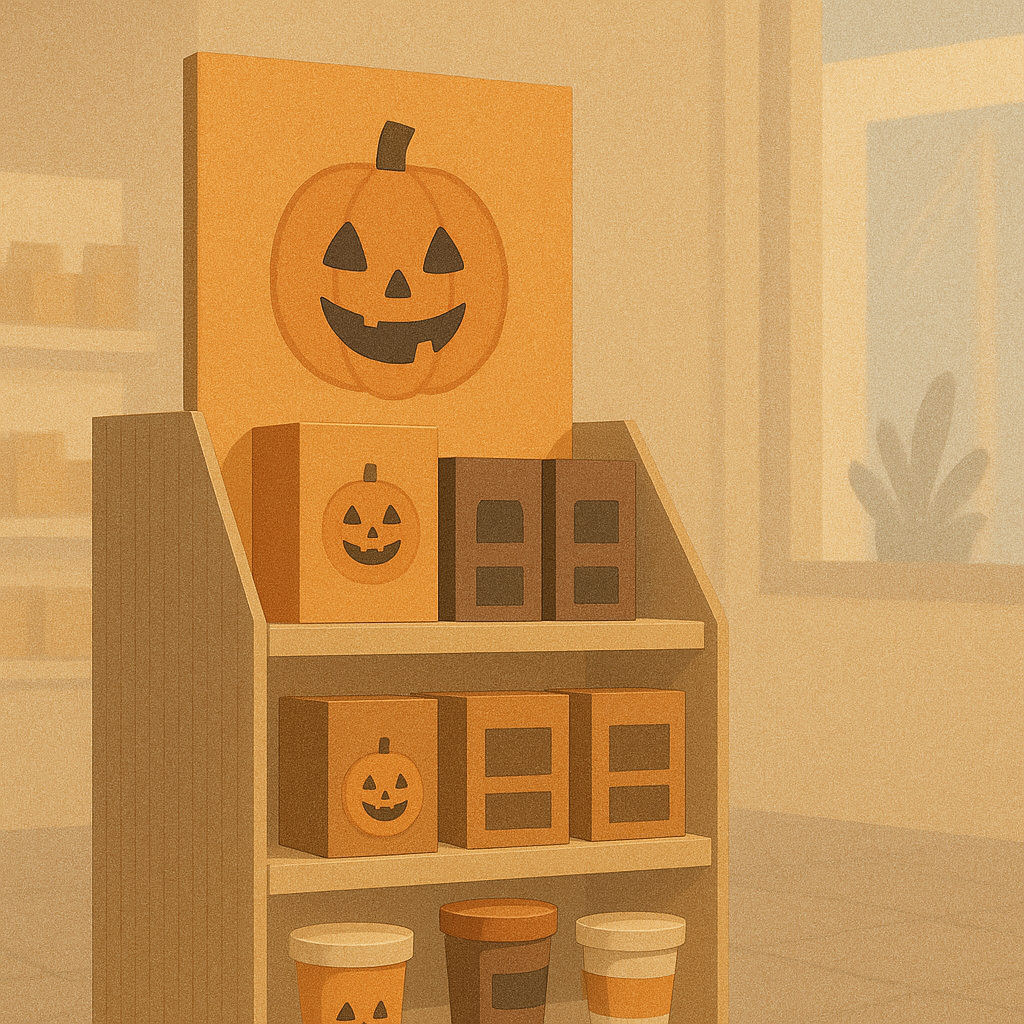
A warm and simple Halloween display showing how visual design transforms retail spaces.
Sustainable materials and simple design bring Halloween spirit to modern retail spaces.
Useful Links:
Latest Posts
All Posts