What Makes a Good Cardboard Display for Snack Products?
Practical Guide to Designing Cardboard Snack Displays: Visual Appeal, Easy Access, Stable Structure, Quick Restocking and Retail-Ready Setup
Back to blogs
Executive Summary
Snack products rely heavily on visibility, impulse buying, and quick shopper decisions. A good cardboard display should do more than look attractive. It needs to make products noticeable, easy to pick up and restock, and stable enough for daily retail use.
For chips, cookies, candy, nuts, and other fast-moving snack categories, effective display design combines clear branding, practical structure, easy access, and smooth retail execution. A well-designed cardboard display can support better product visibility, smoother in-store execution, and stronger promotional performance.
When these elements work together, a cardboard display can help brands stand out in busy stores and support a smoother retail rollout.
Why Snack Displays Need Practical Design
Snack purchases are often quick and spontaneous. In supermarkets, convenience stores, wholesale clubs, and checkout areas, shoppers may give a display only a few seconds of attention before deciding whether to buy.
That is why snack displays should be designed around both shopper behavior and store operations. A display may look appealing in a mockup, but perform poorly in-store if it is hard to assemble, difficult to refill, unstable when fully loaded, or visually overcrowded.
A practical snack display should answer a few basic questions. Can shoppers see the product quickly? Can they understand the main message at a glance? Can they pick up items easily? Can store teams restock it without difficulty? Can the structure remain stable during the promotion period?
Considering these points early helps reduce problems during sampling, production, and retail rollout.
Strong Visual Impact
Snack aisles are usually crowded with colorful packaging, shelf labels, price tags, and competing promotions. To stand out, a cardboard display needs bold but balanced visual design.
Brand colors, clear product imagery, and a recognizable logo help shoppers identify the product quickly. The display should also connect naturally with the packaging, so the brand feels consistent from shelf to display.
For new flavors, seasonal packs, or promotional bundles, the message should be short and easy to read. In most cases, one clear message is enough, such as “New Flavor,” “Family Pack,” “Limited Time Offer,” or “Buy More, Save More.”
Too much text can slow down the shopper’s decision. Snack purchases are often visual and immediate, so the display should guide the eye rather than asking customers to read too much.
Easy Product Visibility and Access
A good snack display should make products easy to see and easy to grab. This is especially important for bagged snacks, candy packs, cookies, and small boxed items.
For many snack products, the challenge is not only load capacity. Lightweight products can still look messy if the structure is not well planned. Bags may slide forward, collapse, or cover front-facing graphics, making the display look understocked or disorganized.
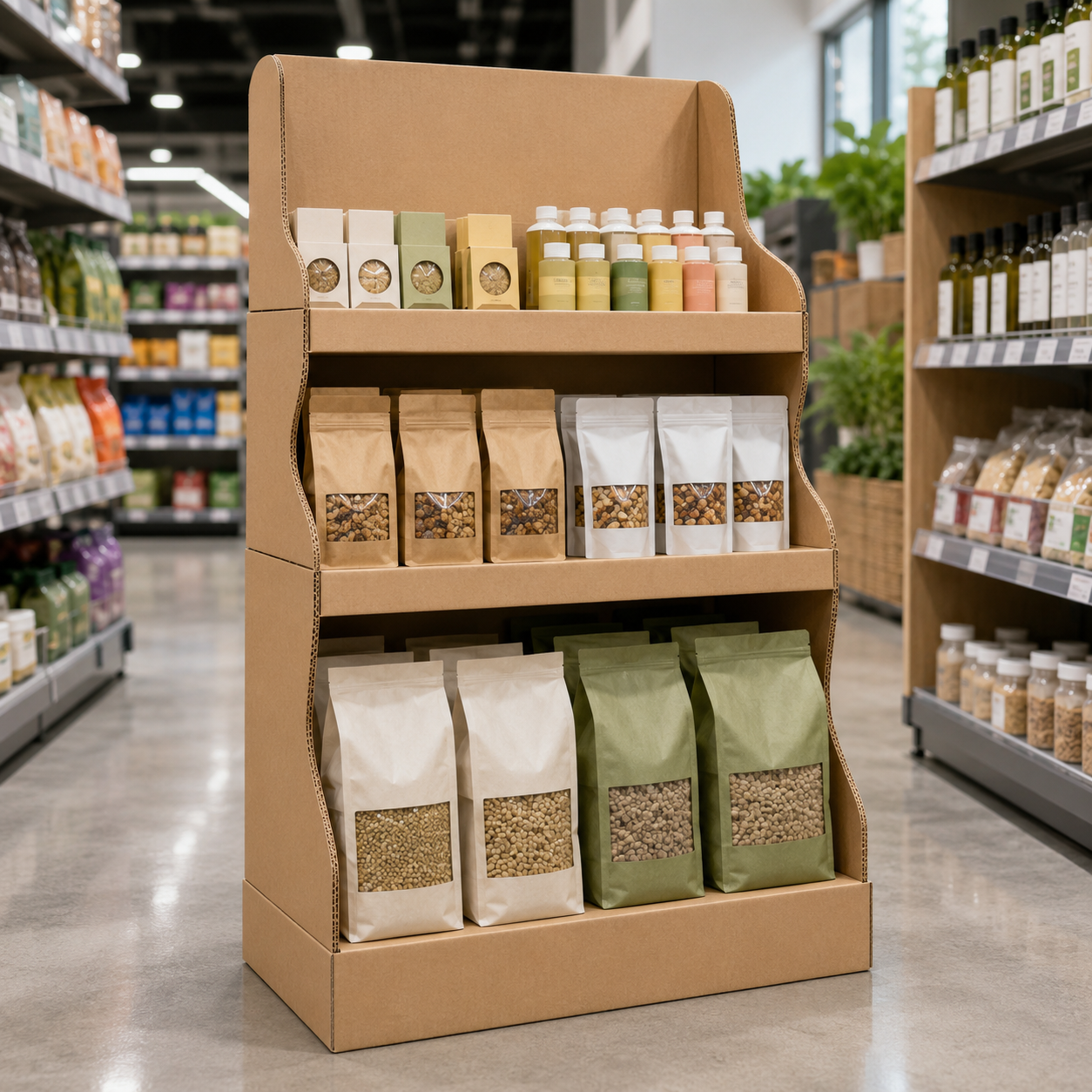
Shelves, trays, dividers, and gravity-feed openings should be designed around the actual product size and packaging shape. The display should look full and tidy, while still allowing shoppers to remove products smoothly.
A good design should also remain neat and shoppable after partial sales, not only when the display is fully stocked.
Stable Structure for Retail Use
Snack products may be light individually, but a fully loaded floor display can still carry significant total weight. The structure needs to support the products safely and stay stable during shopping, restocking, and daily handling.
Important structural details include a stable base, reliable shelf support, balanced weight distribution, reinforced stress points, suitable corrugated board grade, and resistance to leaning or tipping.
Small countertop displays and PDQ trays for candy, gum, or trial-size packs may only need compact support. Larger floor displays, family-size packs, and multi-tier promotional units may require stronger corrugated board and internal reinforcement.
Design teams should also consider how the display will be used in-store, including how shoppers take products, how staff restock, and whether the display will be moved after setup.
Simple Assembly and Restocking
Retail teams prefer displays that are quick to assemble and easy to maintain. If a cardboard display has too many folding steps, unclear crease lines, or requires extra tools, it may not be set up correctly in-store.
For snack promotions, tool-free construction is often a practical advantage. Tab-and-slot structures, clear fold lines, and simple visual instructions can help store staff complete assembly faster. Flat-pack shipping also helps reduce freight volume and simplify storage before rollout.
Restocking should be considered from the beginning. A good snack display should allow staff to refill products without taking the whole unit apart. Shelves should be accessible, product openings should be practical, and the display should stay tidy after replenishment, helping store teams work more efficiently.
Choosing the Right Display Format
Different snack products need different display formats. The best option depends on product size, promotion scale, store layout, and retailer requirements.
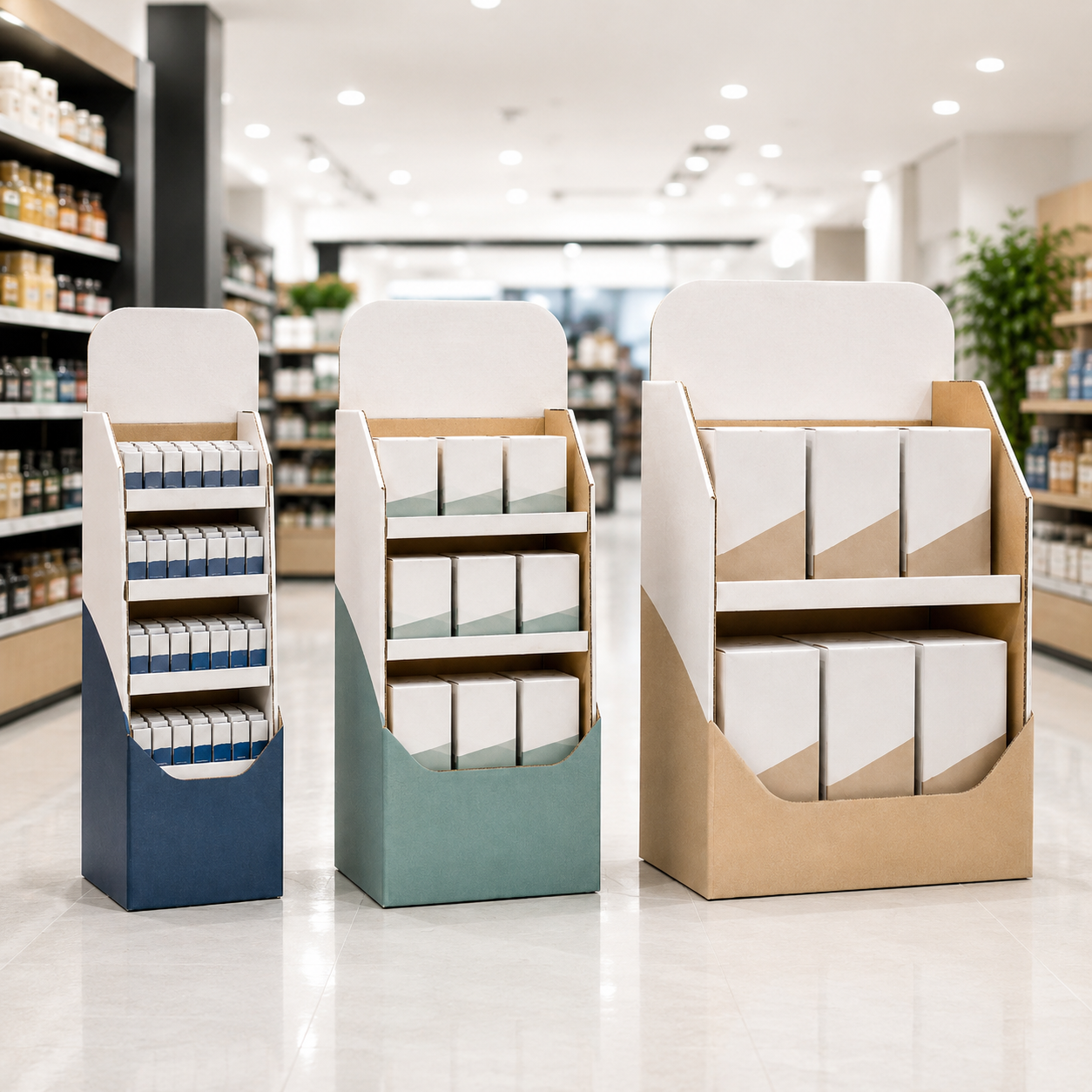
Floor displays are suitable for larger promotions, seasonal campaigns, family-size packs, and high-traffic retail areas. Counter displays work well for small snacks, candy, gum, and trial-size packs near checkout counters.
Sidekick displays are useful for cross-merchandising in busy aisles, such as placing snacks near drinks, deli items, lunch products, or convenience foods.
PDQ displays are practical for retail-ready programs, helping reduce store handling and speed up shelf placement. Endcap displays are ideal for promotions that need visibility from main aisles, with clear branding, enough product capacity, and easy shopper access. Impulse displays near checkout or high-traffic areas can also encourage quick add-on purchases.
Choosing the right format early helps avoid later problems with sizing, packing, transportation, and in-store execution.
Materials, Shipping, and Store Execution
Corrugated cardboard is widely used for snack POP displays because it is lightweight, printable, cost-effective, and recyclable. For seasonal campaigns and fast-moving snack promotions, it offers a practical balance between visual impact and budget control.
Material selection should match the product and retail environment. Fine-flute board can support cleaner printing for premium graphics, while stronger corrugated structures may be needed for larger floor displays or heavier product loads.
For brands and retailers with sustainability goals, recyclable corrugated board, FSC-certified materials, and water-based inks can support a more responsible display program. However, sustainability claims should be accurate and grounded in the actual board, coatings, inks, and local recycling conditions.
A good cardboard display should also be planned for the supply chain, not just the store. It needs to withstand packing, transportation, warehouse storage, and manual handling before reaching the retail floor.
Before mass production, brands and suppliers should review display dimensions, product fit, load capacity, assembly steps, print quality, packing method, carton labeling, pallet plan, and retailer requirements.


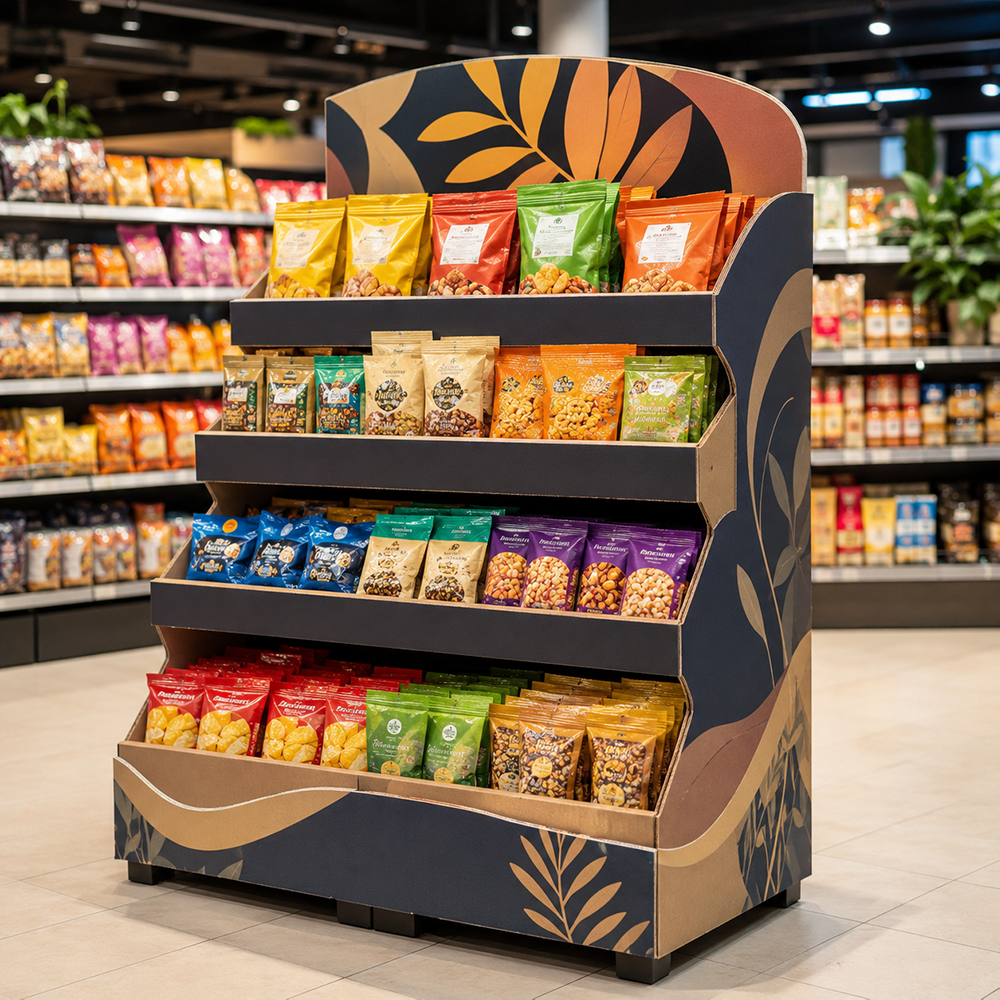
A custom cardboard snack display in a modern retail aisle, designed for strong product visibility, easy shopper access, stable structure, and smooth in-store execution.
Useful Links:
Latest Posts
All Posts