How to Choose the Right Custom Cardboard Display Stand for Your Brand
Learn how to choose a custom cardboard display stand by load capacity, store placement, shipping, branding, and sustainability for retail campaigns.
Back to blogs
A practical purchasing guide for retail campaigns
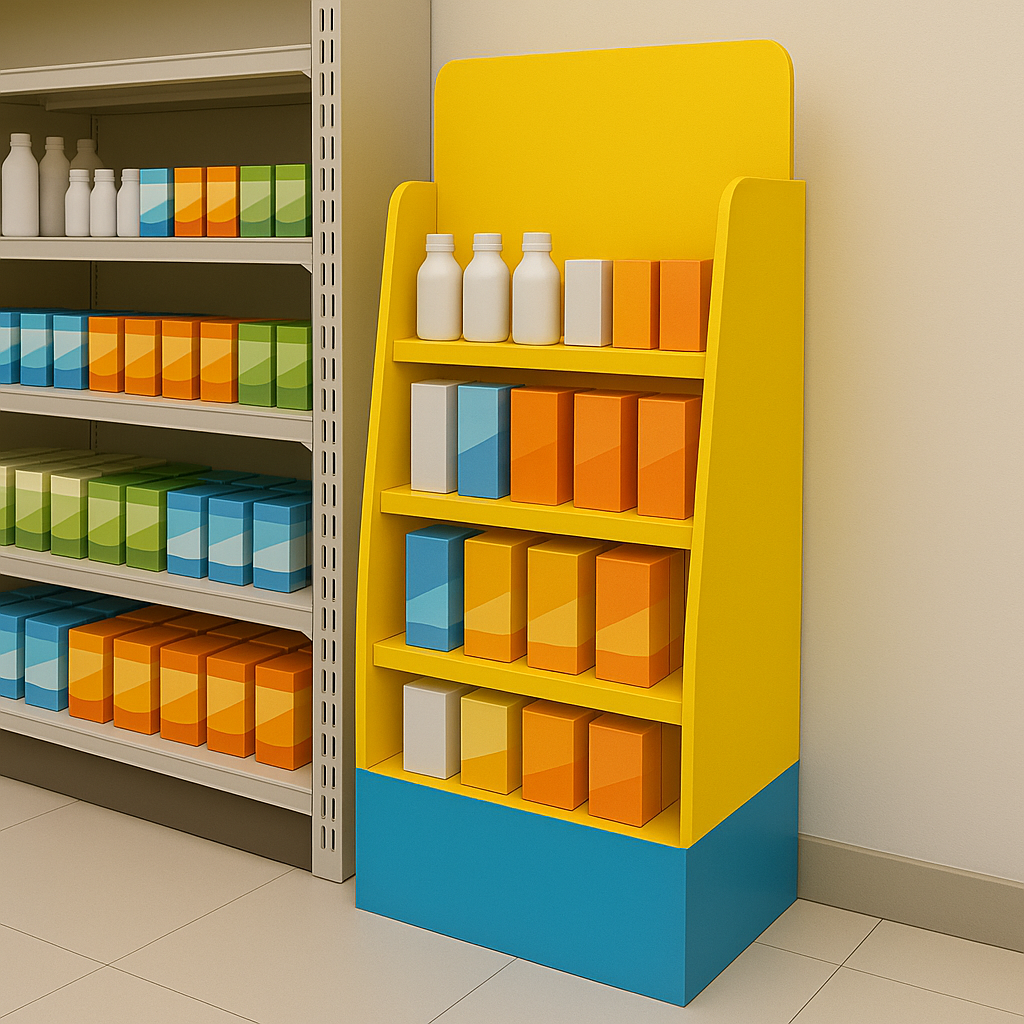
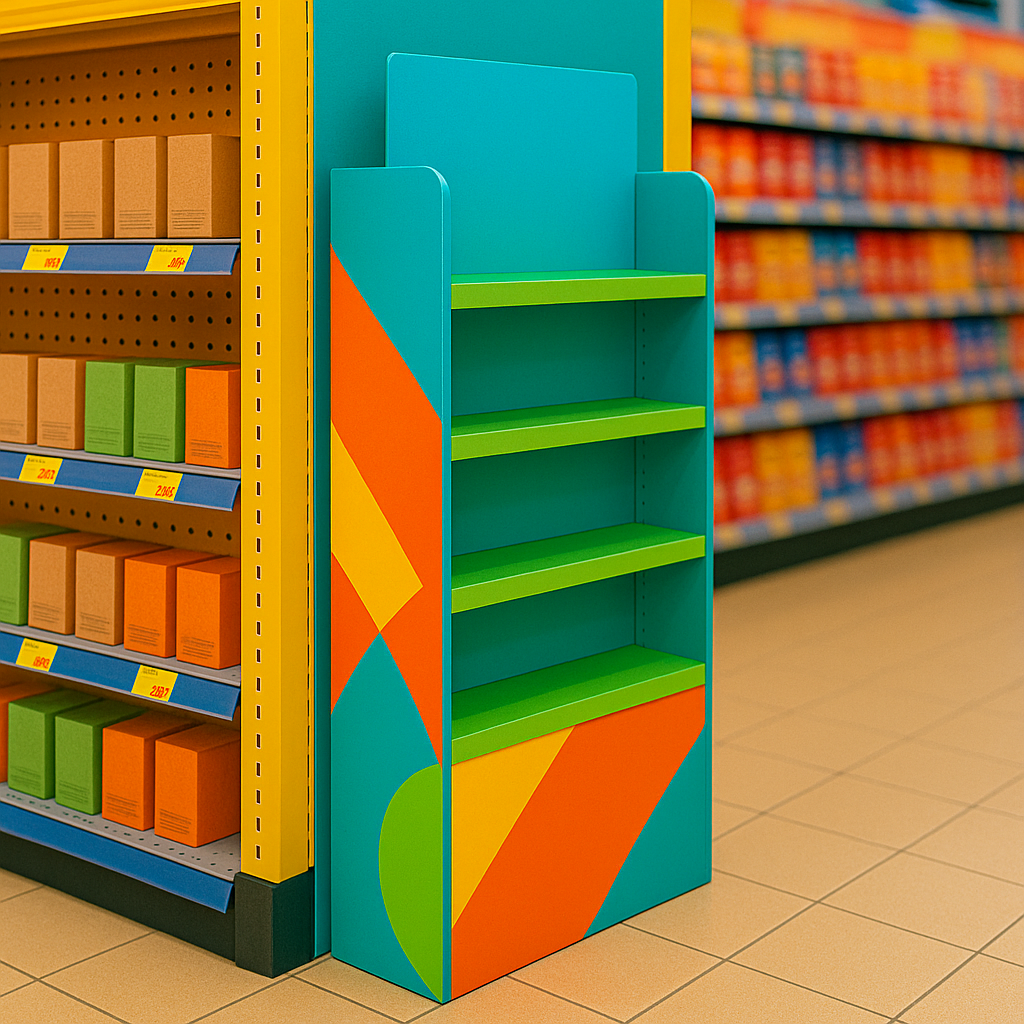
Cardboard display stands are widely used in supermarkets, convenience stores, pharmacies, beauty retailers, and electronics stores. You will often see them at checkout counters, endcaps, main aisles, and other high traffic areas.
The reason is simple: a well designed POP or POS display helps products stand out exactly where shoppers make decisions. It improves visibility, communicates key messages fast, and can drive trial and impulse purchases.
Compared with metal fixtures or acrylic displays, custom cardboard display stands are lighter, more cost effective, and much easier to customize for branding. They can also be recycled after the campaign, making them a strong fit for brands with sustainability goals.
If you are planning a new product launch, a seasonal promotion, or a multi store rollout, the five factors below will help you choose the right display faster and avoid common mistakes.
1. Brand visibility comes first
Your display is a visual extension of your brand
A cardboard display stand is not just a place to hold products. In many stores, it works like a three dimensional advertising space.
Before choosing a design, confirm these essentials:
- Does the color and logo follow your brand guidelines and stay visible from a distance?
- Is the message simple enough to understand in one glance?
- Does the structure look memorable while still matching your brand style?
If you want stronger impact, you can add branding features such as a header sign, side panels, or a custom cut out shape.
One key rule: creative shapes should never block product access or make restocking difficult. A great display should look strong and work smoothly in real stores.
2. Load capacity matters more than most buyers expect
Heavier products require stronger structure
One of the most common issues in cardboard display purchasing is underestimating weight.
A display for snack bags is very different from a display for bottled drinks. The heavier the products and the taller the display, the more stability becomes a priority.
A simple way to estimate load needs:
- Calculate the weight of one unit
- Multiply by units per shelf
- Multiply by the total number of shelves
- Add a safety margin for real store handling
Why the safety margin matters: customer picking and frequent restocking create extra pressure. Real world load is often higher than a static calculation.
A stable retail display usually includes:
• A suitable corrugated grade and thickness
• A wider base and lower center of gravity
• Reinforced shelves or internal support parts
• Extra protection when needed for stability
For large retailers, durability directly affects execution cost. If the stand bends or deforms, the display looks messy and the promotion loses impact quickly.
3. Store placement decides the display type
Floor, counter, or shelf side display
Before selecting a display, confirm where it will be placed in store. Many displays fail because the format does not match the available space.
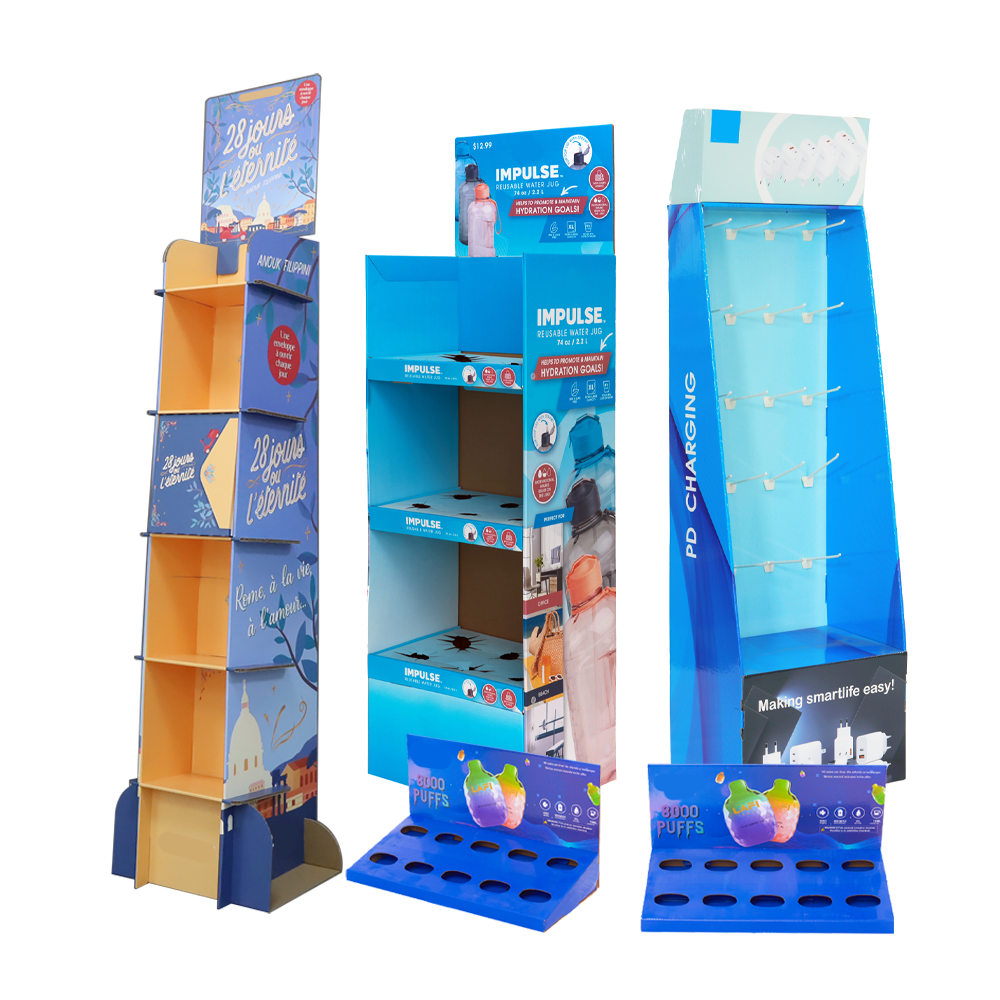
Floor display stands
Best for entrances, endcap areas, and main aisles.
They create strong visibility and hold more products, making them ideal for larger campaigns.
Counter display stands
Best for checkout counters, service desks, and sampling zones.
They work well for smaller items, repeat purchase products, and impulse categories.
Shelf side displays
Often called sidekicks or power wings.
They attach to the side of a shelf without taking floor space. This is useful when stores have limited promotional spots but you still want extra exposure.
Before finalizing your choice, check store requirements such as height limits, aisle width, and staff restocking routes. Even the best design will not perform if it cannot be placed correctly.
4. Assembly and shipping affect rollout cost
For multi store campaigns, execution speed is everything
When displays ship to many stores, assembly complexity becomes a real cost factor. If store staff find setup difficult, execution quality drops.
Most suppliers offer two delivery options:
• Flat pack delivery: lower shipping volume, requires in store assembly
• Preassembled delivery: faster setup, higher shipping and storage cost
Before placing a bulk order, request a sample and test these points:
- Is assembly intuitive, with low risk of mistakes?
- Does it require tools?
- Does it feel stable after setup, without wobbling?
A good custom cardboard display should ship efficiently, set up quickly, and stay strong during daily use. That is how you protect both performance and store compliance.
5. Sustainability should be real, not just a slogan
Eco friendly design must also be practical
More brands and retailers now include POP display materials in their sustainability review process. Cardboard is a strong foundation, but you still need to confirm the details.
Key questions to ask:
- Are the materials recyclable and paper based?
- Are water based inks available?
- Can the supplier meet certification needs such as FSC?
- Is the display easy to recycle after removal, or designed for reuse?
This is not only about compliance. In many retail environments, sustainable displays also strengthen brand trust and customer preference.
Quick selection guide for buyers
Choose based on your campaign goal:
• High visibility and large product volume: Floor display stand
• Better checkout conversion: Counter display stand
• Extra exposure without floor space: Shelf side display
• Endcap theme campaigns: Endcap structure
• Large volume promotions with stacking: Pallet display
What to send your supplier before production
Better input means better results
To speed up design and prototyping, prepare these details:
- Product size, unit weight, and packaging format
- Number of SKUs and units per shelf
- Placement location (checkout, endcap, aisle, shelf side)
- Store count and number of displays per store
- Lead time requirements and preferred delivery method
- Printing needs (CMYK, Pantone, lamination, UV)
- Sustainability or certification requirements
When your supplier receives clear information, the structure becomes more accurate, prototyping moves faster, and mass production runs more smoothly.
Final thoughts
Choosing the right custom cardboard display stand is not only about appearance. A successful retail POP display balances brand visibility, structural strength, store space, shipping efficiency, and sustainability needs.
When these factors match, your display stays neat, performs longer, and supports stronger product visibility and conversion.
If you would like, you can share your product size and placement scenario. We can help you choose the right format and recommend reinforcement options for better stability and smoother in store execution.


Custom cardboard display stand guide: choose by branding, load strength, placement, fast assembly/shipping, and real sustainability for retail rollouts.
Useful Links:
- Structural Design of Corrugated POP Displays: Premium Appearance, Solid Strength – How to match board grade and flute to load, build clear load paths, and reinforce shelves and bases to prevent sagging or wobble.
- Floor, Counter, or Sidekick POP Displays: Which One Is Best for Your Product? – A practical format comparison based on placement, capacity, and store execution constraints.
- Understanding PDQ Displays: What They Mean and Why Retailers Use Them – PDQ basics, shelf ready context, and why retailers like “ship to shelf” speed.
- How to Design Eye-catching Corrugated Cardboard POP Displays – Visibility and messaging principles plus a pre production checklist to avoid common rollout issues.
- How Lightweight Paper Display Stands Reduce Total Supply Chain Costs – Flat pack benefits, storage savings, labor efficiency, and faster lead times for multi store rollouts.
- Pricing Guide: Choosing the Right Cardboard Display – Material and structure cost drivers (flutes, laminations/coatings, complexity, scale) to budget more accurately.
- Quality Control – What gets checked and tested (color accuracy, load, burst, drop, in process inspection) before shipment.
- Compliance & Certifications – FSC Chain of Custody, ISO systems, and other certifications buyers often request for retail programs.
- How Surface Finishes Transform Paper Boxes and Displays Into Customer Magnets – A quick guide to lamination, UV, and foil options when you want a more premium look.
Latest Posts
All Posts