
Tool-Free POP Display Assembly: How Brands Can Speed Up In-Store Setup
Tool-free POP display assembly helps brands speed up in-store setup with simpler structures, clearer instructions, and more consistent retail execution.
Back to blogs
A POP display may look impressive during a concept review, but real success depends on how it performs in-store. If setup takes too long or the steps are unclear, even a well-designed display unit may lead to delays, assembly errors, or even be unable to be placed on the sales floor. That is why tool-free assembly should be considered early in the design process.
For brands, the goal is practical. A display should arrive ready for quick, straightforward setup with as little effort as possible. The easier it is for store staff to open, assemble, and place the display unit, the easier it is to maintain consistent execution across locations.
Why Tool-Free Assembly Matters
The store team works in a fast-paced environment. They need to handle deliveries, restock shelves, assist customers, and set up promotional displays at the same time. Under such circumstances, any display that requires additional hardware, cutting tools, or complex assembly steps becomes difficult to manage.
Tool-free assembly helps eliminate these obstacles. It allows staff to move more smoothly from unpacking to setup, while reducing the potential for errors. This is crucial because the effect of a display depends not only on its appearance, but also on whether the display unit can be properly assembled and placed on time in real retail environments.
What Makes a Display Truly Tool-Free
Tool-free POP displays are designed to be assembled with only the components included in the packaging. During standard setup, they do not require screws, separate fixing hardware, or additional materials. Instead, their structure is usually achieved through folding, snap-fit, slotted components, or pre-assembled parts. However, this does not mean the display looks flimsy. A well-designed corrugated cardboard display stand can feature a refined appearance, properly support products, and effectively present the brand image while remaining easy to assemble. The goal is not to sacrifice all details, but to enable store staff to complete the setup clearly and efficiently.
Design Choices That Help Speed Up Assembly
The fastest-to-assemble displays usually stay simple from the start. The fewer parts, the better. The clearer the component layout, the better. And a structure that guides users naturally from one step to the next is more important.
Locking points are also crucial. If the clips are too tight, they not only slow down assembly but may also damage the display panels during assembly; if the clips are too loose, the display may appear unstable once assembled. The key to excellent tool-free design lies in achieving this balance.
Pre-assembled components can also speed up store installation. In some designs, partial pre-assembly allows store staff to unfold, lock, and place the display more easily with fewer steps. This enables smoother rollout, especially when the same display needs to be set up across multiple stores.
Flat packing efficiency should not create trouble for stores
Many POP display stands are shipped flat to save shipping space. This makes perfect sense from a logistics perspective, but shipping efficiency should not come at the expense of in-store usability. Compact packaging can only truly deliver value when the display stands can be neatly unfolded and the assembly process is clear and straightforward.
Excellent designs balance these two requirements. They enable efficient shipping while ensuring the unpacking process is intuitive and manageable. Panels should retain their shape, shelves should lock into place without excessive force, and the entire assembly process should feel natural throughout.
Instructions Still Matter
Clear instructions remain essential even with tool-free designs. The installation process should be simple and easy to understand.
Excellent instructions should be concise, straightforward, and limited to steps requiring explanation. If the guide is too long, a simple operation may appear more complicated than it actually is; if there are no instructions at all, subtle but important details may be overlooked. The ideal outcome is achieved when the design is intuitive and easy to understand, and the instructions simply serve to confirm the steps.
What Commonly Slows Setup Down
One common issue is overcomplication. Superfluous decorative parts, unnecessary linings, or excessive assembly steps not only slow down the setup speed but offer little practical value.
Another issue is poor structural stability. If the display stand cannot maintain its shape during assembly, staff may need to stop to adjust components or rebuild parts of the structure before continuing. This disrupts the workflow and reduces the display stand’s users' friendliness.
Confusion over parts can also lead to delays. When shelves or panels look similar but are not interchangeable, the chance of errors increases. If the correct direction for installing parts is not clear, the same issue arises.
In some cases, the problem stems from the packaging itself. If the cardboard box is difficult to open, or if the parts are arranged in an illogical order, time is wasted even before assembly begins.
Why Brands Should Consider Assembly Early
While visual appeal is important, it should not be the only consideration. Displays must also perform smoothly in the actual retail environment.
Therefore, assembly convenience should be considered early in the development process, rather than left until the final stages. Incorporating easy assembly into the structural design from the start usually makes the product easier to deploy, simpler for store teams to handle, and ensures a consistent display effect across all stores.
Displays can be effective without being complicated. In many cases, the most effective displays are those that combine excellent presentation with simple, reliable assembly.
Conclusion
Tool-free POP display assembly helps brands turn good display design into smoother in-store execution. It supports faster setup, reduces unnecessary handling, and makes displays easier for store teams to place correctly.
For retail promotions, this practical advantage is crucial. Easily assembled display stands are not only simpler to set up and manage, but are also more likely to be placed in the sales floor on time.
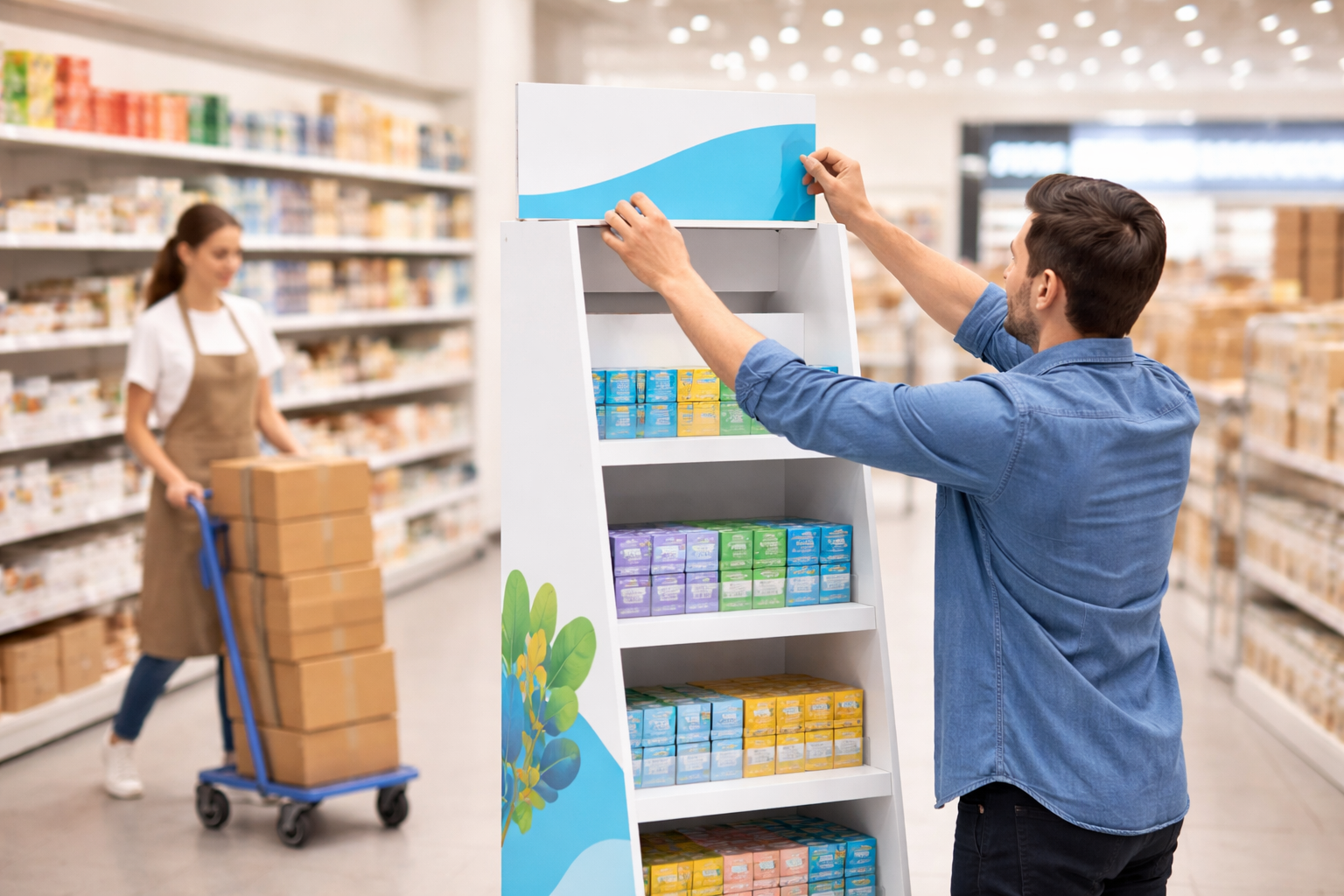
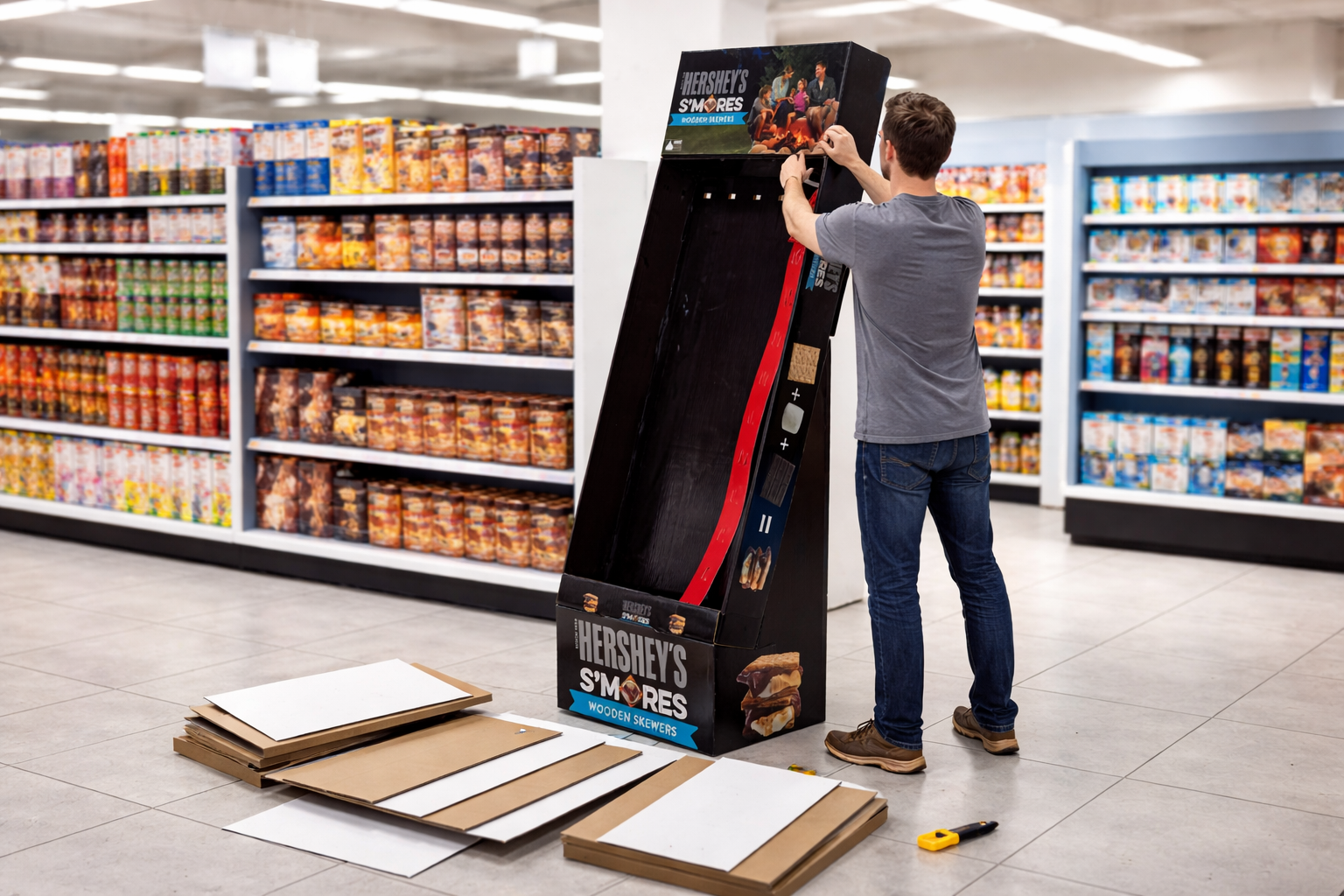
Tool-free POP display for fast in-store setup.
Useful Links:
Latest Posts
All Posts