How to Design a Cardboard Display for Easy Restocking
Learn how to design restock-friendly cardboard displays with the right format, refill path, board grade, assembly method, and prototype testing.
Back to blogs
Executive Summary
A well-designed cardboard display should not only catch the shopper’s eye, but also be easy for store teams to refill, maintain, and keep neat throughout the promotion.
Easy restocking means fewer handling steps, less confusion, and a cleaner presentation on the sales floor. Store staff should quickly understand where products go, how they load, and how the display stays stable as stock levels change.
That’s why restocking must be planned before artwork and dielines are finalized. Product size, unit weight, case pack, display footprint, refill method, campaign length, and store environment all affect the final structure. Confirming these details early makes the display easier to use and more reliable in real retail conditions.
Start with Real Store Conditions
Design for easy restocking begins with a clear picture of how the display will actually be used in-store.
Convenience stores, supermarkets, pharmacies, warehouse clubs, and seasonal promotion areas all have different space limits and replenishment needs. A countertop display may need quick top-up access. A shelf tray or PDQ display may need to move from carton to shelf with minimal handling. A floor display or pallet display may require more stock capacity, greater visibility, and stable loading.
Before locking the structure, define the refill frequency, loading direction, SKU mix, and campaign timeline. The goal is simple: less manual work, less confusion, and a display that stays organized with minimal effort from store teams.
Choose the Right Display Format
The display format should match the product, store space, and daily refill pattern.
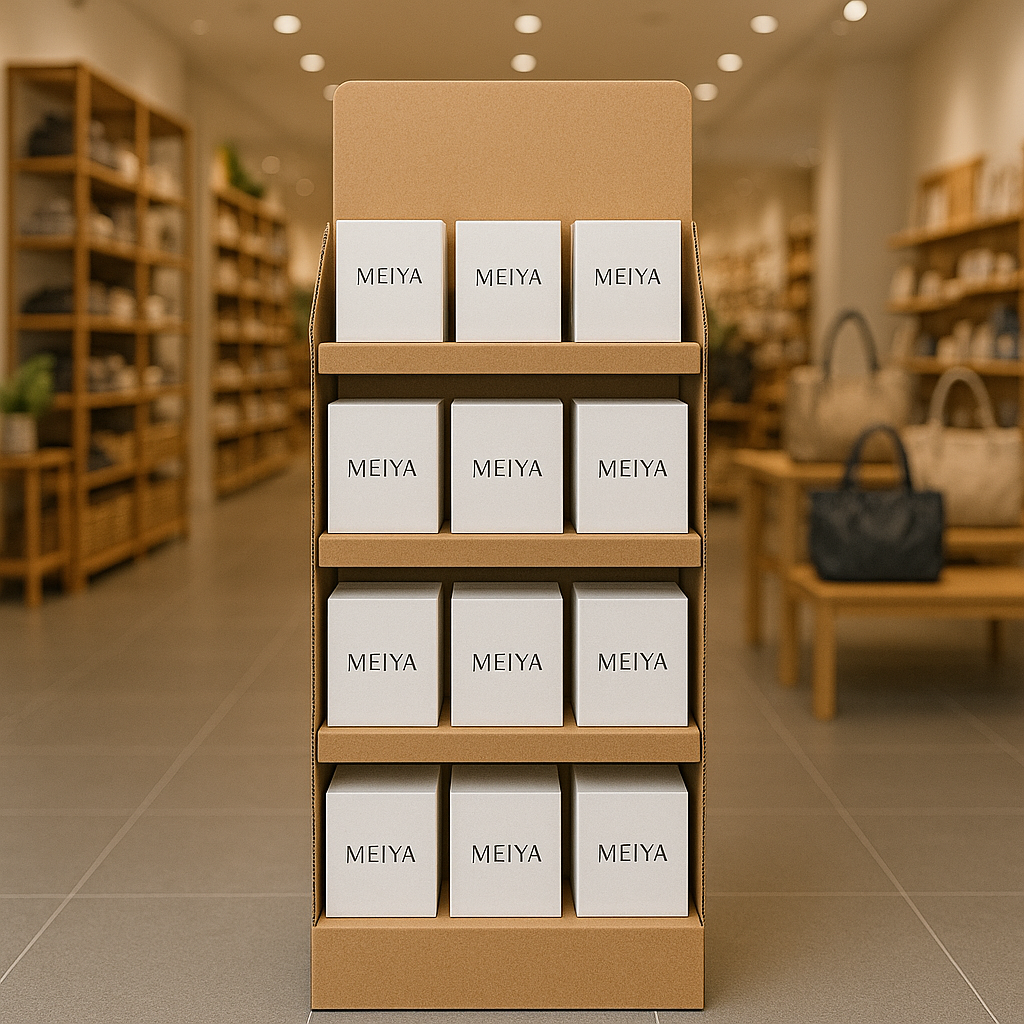
Small, lightweight, fast-moving items often work well in countertop displays or shelf trays — easy to place, simple to refill, and ideal for checkout areas or impulse zones.
Products with multiple flavors, colors, or variants may need divided PDQ trays or separated shelf units. Clear product lanes help prevent SKU mixing and make it easy to see which items need refilling.
For larger promotions, floor displays and dump bins can hold more product and create stronger visual impact. However, they also need better control over product movement. The front lip, shelf depth, and dividers should prevent products from sliding, falling, or getting hidden.
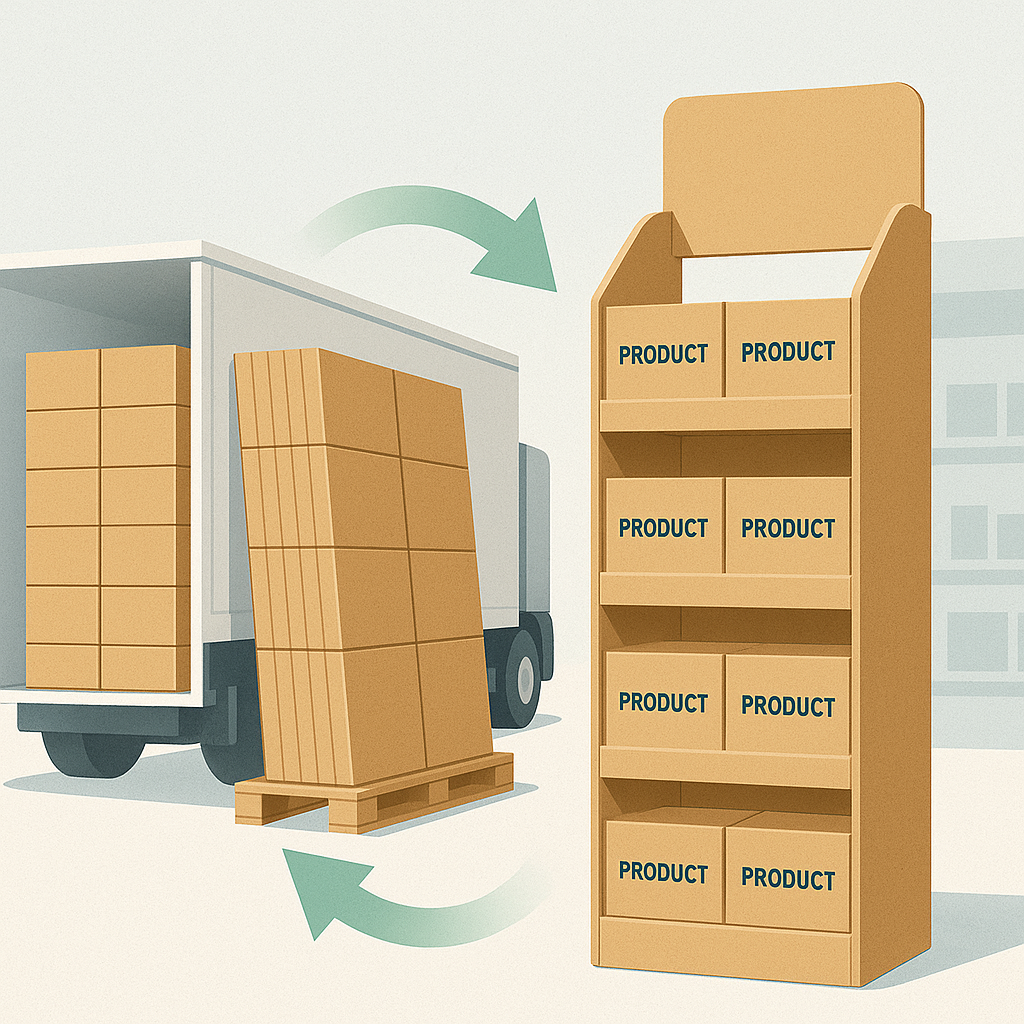
In supermarkets, warehouse clubs, and big-box retailers, quarter-pallet and half-pallet displays can reduce in-store handling when the footprint, loading plan, and structural strength are confirmed early.
Make the Refill Path Easy to Follow
A restock-friendly display should require no extra training.
Staff shouldn’t have to guess where to open the carton, where to load the product, or which tray goes where. The structure itself should guide the refill process.
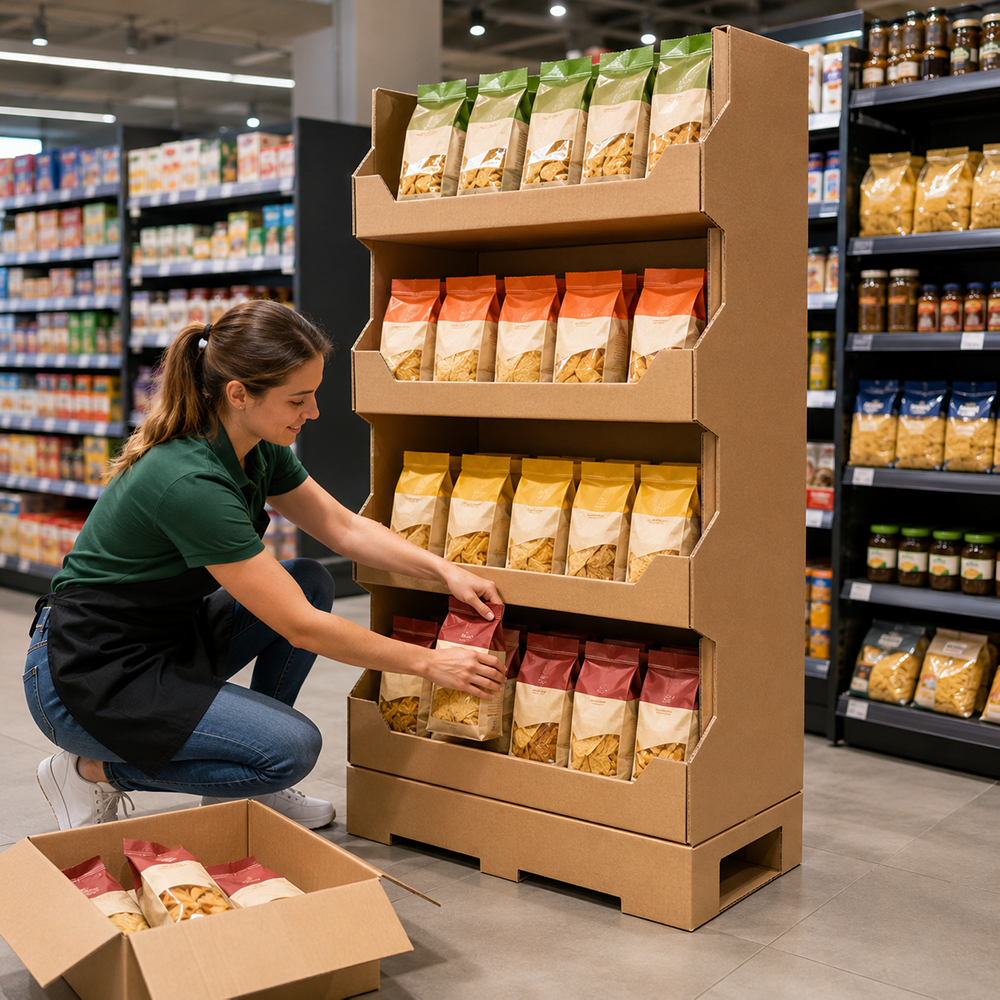
Front loading works well for shelf-facing displays where staff refill from the same side shoppers pick from. Top loading suits dump bins or open wells that are replenished in batches. Replaceable trays are useful when products ship in retail-ready units. Dividers help keep different SKUs separated and upright.
Small details matter: clearly separated lanes, trays that fit only one way, tear-open areas that are easy to find. These reduce mistakes and speed up daily restocking.
Printed guidance can also help, but it should be subtle and practical. Place operating cues on inner panels, tray edges, side flaps, or assembly areas without affecting shopper-facing graphics.
Keep Products Visible and Neatly Positioned
Efficient restocking isn’t just about adding inventory, it’s about keeping the display neat as shoppers begin picking.
Front lip height, side walls, shelf depth, dividers, and product stops all affect how products behave as stock levels drop. Shelves that are too deep let products move backward and lose visibility. Too few dividers let small items shift, mix, or fall out of place.
The half-empty stage is especially important. Many displays look stable when fully stocked but turn messy as inventory drops. Products may lean forward, slide sideways, or become blocked by the front panel, creating extra work for staff and weakening the shopping experience.
A better design keeps products visible at different stock levels. Low front edges, controlled shelf depth, internal dividers, angled trays, step structures, and product stops all help maintain a tidy display throughout the promotion.
Match the Board Grade to the Real Use Case
Board selection should be based on product weight, store environment, campaign length, and shipping method.
Lightweight products in dry indoor spaces may only need lighter paperboard or corrugated structures. Heavier products, longer promotions, or displays that will be handled frequently call for stronger corrugated board. Reinforced shelves, stronger front lips, side support panels, and secure locking tabs help the display keep its shape during transport, setup, and repeated restocking.
Humidity matters, too. Displays placed near entrances, refrigerated areas, cleaning zones, or high-traffic spaces may face more moisture and handling pressure than expected. In these cases, the display may need a stronger board grade, better reinforcement, or a suitable moisture-resistant treatment.
The goal is not to use the thickest board every time. Overbuilding drives up cost, shipping weight, freight space, and setup difficulty. Underbuilding leads to damage, poor presentation, and retailer complaints.
Keep On-Site Assembly Simple
A display that is difficult to assemble is rarely easy to restock.
Retail staff often have limited time, especially during busy promotional periods. Too many loose parts, unclear fold lines, weak locking tabs, or confusing instructions can lead to incorrect assembly. Poor assembly makes restocking harder and weakens the whole structure.
Good design should make setup simple: tool-free assembly, clear folding sequences, secure locking tabs, and parts that fit together in only one way. Flat-packed displays should open smoothly without forced bending, trimming, or on-site repair. The easier the display is to set up correctly, the more likely it is to perform well throughout daily store use.
Test with Real Restocking Motions
Prototype testing must go beyond appearance.
A display may look good when fully loaded, but real performance depends on setup, shopper picking, daily refilling, and in-store movement. Before mass production, test physical prototypes with real products and realistic handling.
Check stability when the display is full, half full, and nearly empty. Test product picking, tray replacement, carton opening, and repeated handling. These practical tests reveal problems that drawings cannot show: products may lean after repeated picking, small packs may mix across lanes, or a tray may become difficult to insert after assembly. Finding these issues early helps avoid trouble during the retail rollout.
Consider Cost and Sustainability Early
A practical display must also make commercial sense. The best structure is not the strongest or most complex, it is the simplest one that can support the product, protect the presentation, work in the retail environment, and stay within budget.
Cost can often be controlled by reducing unnecessary parts, simplifying glue points, using standard footprints, and planning for flat-pack shipping. These choices improve efficiency without weakening performance.
Think about sustainability early as well. Displays made mostly of paper with fewer mixed materials are easier to recycle after the promotion. A display that is easy to flatten, separate, and collect is more likely to be handled correctly at the end of its life.
Conclusion
Easy restocking cannot be added as a last-minute detail. It needs to be built into the structure from the start.
When the display format, refill path, board grade, shelf layout, assembly method, and testing plan work together, the display becomes easier for store teams to use and easier for shoppers to understand.
For brands and retailers, a good cardboard display is more than a printed marketing tool, it is a practical retail fixture. The better it supports real store operations, the better it performs on the sales floor.
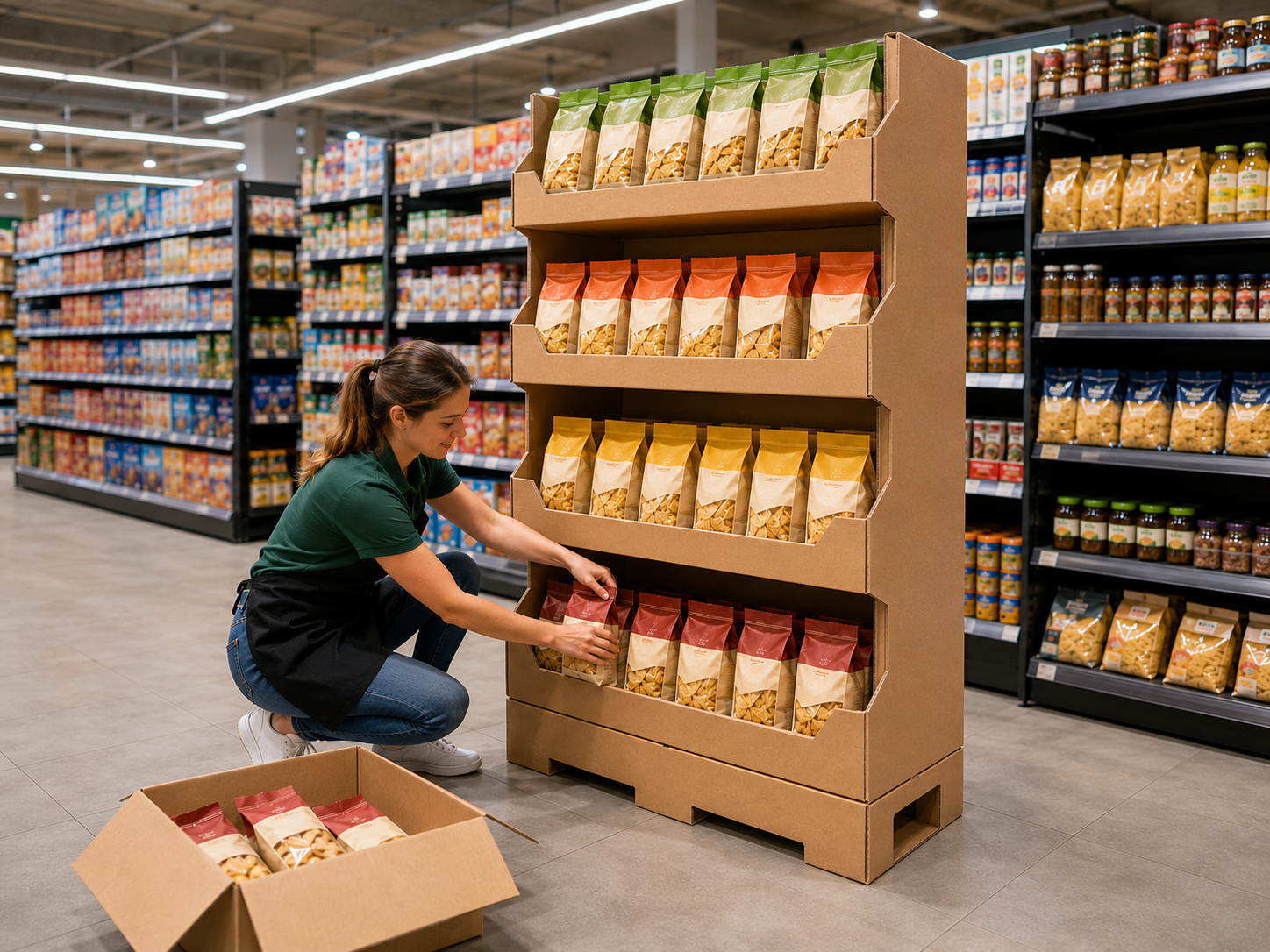

A corrugated cardboard retail display with easy-access shelving helps store teams refill products quickly while keeping the presentation clean and organized.
Useful Links:
Latest Posts
All Posts